Kaladin–Dalinar alliance
The Way of KingsThe Kaladin–Dalinar alliance is forged when mutual obligation crosses the rigid boundary between highprince and bridgeman. Kaladin’s decision to return with Bridge Four saves Dalinar, his son, and many of his soldiers; Dalinar’s response is not merely gratitude but a public commitment to protect the men who made that rescue possible. Their relationship therefore joins battlefield trust to a direct challenge against the system that treats bridgemen as expendable.
Origin in the Battle
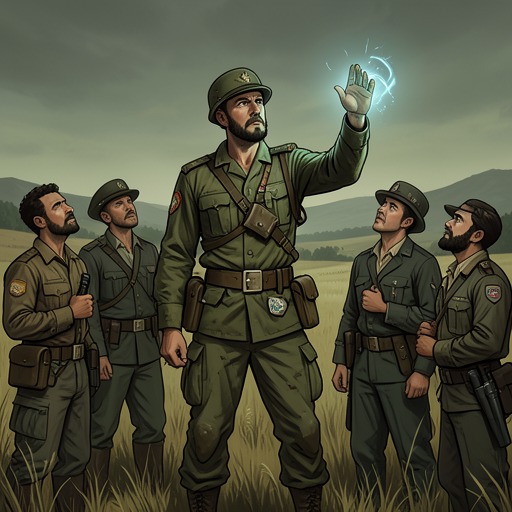
The alliance takes shape at the moment when Kaladin and Bridge Four abandon the safety offered by retreat. Kaladin understands that going back may lead the men who trust him to their deaths, yet he says that they must return. The decision is collective: the former army “dregs,” men who had previously cared only for their own survival, breathe deeply and nod one after another. Their response establishes that Kaladin’s authority is no longer based on rank or coercion. Bridge Four follows because its members have chosen loyalty over safety, and Kaladin’s renewed strength is marked by Stormlight rushing into him as he prepares to act.
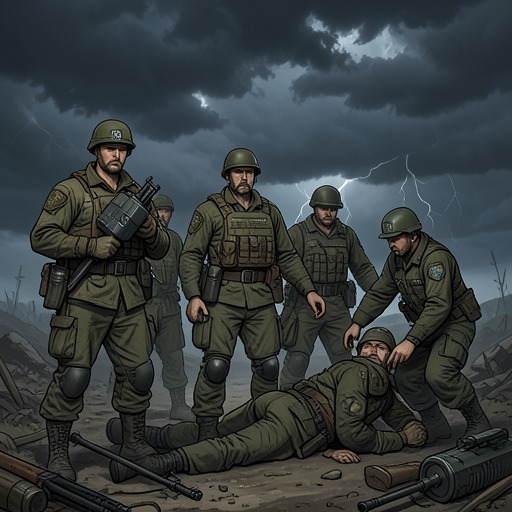
Dalinar encounters the returning bridge crew while he is wounded and confronting a fallen Parshendi Shardbearer. His foot is unresponsive, and he is tempted to finish the injured enemy and claim the Shardplate and Shardblade. Before he can do so, a tall Parshendi spearman takes Gallant’s reins and orders him onto his horse. The intervention gives Dalinar the immediate means to survive, while the Parshendi turn to meet approaching Alethi soldiers. The rescue is thus shaped by several reversals at once: Dalinar, a highprince accustomed to command, is physically dependent on another’s order; the bridgemen arrive as rescuers rather than disposable labor; and the battlefield’s expected lines of power briefly collapse.
Recognition and Mutual Debt
Dalinar soon learns that the bridge crew did not return because Torol Sadeas commanded it. When he asks why their highprince retreated only to send them back, the bridgemen answer that Sadeas did not send them and that they came against his wishes. This fact transforms the rescue from an ordinary military maneuver into an act of deliberate disobedience. Kaladin and his men have placed their lives behind a principle that Sadeas’s strategy rejects, and Dalinar recognizes the distinction.
The exchange also changes how Dalinar sees Kaladin. The young leader bears slave brands on his forehead, partly hidden by his hair, and stands with a hostile posture and folded arms. Yet Dalinar’s officers report that Kaladin gave them orders, took charge like a lighteyes, and steadied men who were shocked or exhausted. Kaladin minimizes his role, saying that he merely nudged the officers, but the evidence of his leadership is already visible in the survival of Dalinar’s force. The contrast between his branded status and his conduct under pressure exposes the inadequacy of Alethi rank as a measure of authority.
Dalinar states that he owes Kaladin his life twice over, as well as the lives of his son and his men. Kaladin answers that Dalinar has paid the debt, but Dalinar refuses to let the matter end as a simple transaction. He asks why Bridge Four truly came for them. The question seeks the moral basis of Kaladin’s action, not merely its military explanation, and it places their relationship on a foundation of explicit accountability. Their alliance begins with debt, but it cannot be reduced to debt: Kaladin has acted from chosen responsibility, while Dalinar seeks to answer that responsibility with an equally consequential act.
The Shardblade Bargain
After the battle, Dalinar declares that the alliance with Sadeas has proven “unfeasible,” and he announces that he will take the bridgemen to his own camp. Sadeas refuses to part with them. The dispute makes clear that the men remain possessions within Sadeas’s military system, despite their extraordinary service. Kaladin’s heart sinks because the rescue has not yet freed Bridge Four from the authority that spent bridgemen as replaceable tools.
Dalinar then converts his gratitude into an irreversible bargain. He offers Sadeas his Shardblade in exchange for the bridgemen. Sadeas’s hesitation is governed by lust for the weapon: he looks at the Blade, looks at Kaladin, and finally takes the hilt before agreeing to let Dalinar take the men. The transaction is coercive in its setting but morally subversive in its meaning. Dalinar uses the highest-value object available to him to acquire people whom Sadeas calls worthless, reversing the valuation imposed by the army’s hierarchy.
Sadeas mocks Dalinar as one of the ten fools and predicts that the decision will be remembered as the most ridiculous ever made by an Alethi highprince. Dalinar nevertheless turns away and tells his entourage to leave. His choice separates him from Sadeas not only politically but ethically. The Shardblade, which could have fulfilled Dalinar’s promise to Renarin, is surrendered instead for the freedom and protection of the bridgemen. The bargain makes Kaladin’s rescue of Dalinar reciprocal: Kaladin saves Dalinar’s life in battle, and Dalinar spends his own military power to change the conditions of Kaladin’s life.
Structure of the Alliance
The relationship links two leaders who command in different ways. Kaladin leads from within the most degraded level of the army, gaining obedience through shared danger and personal example. His decision to return forces Bridge Four to become a community capable of choosing sacrifice. Dalinar leads from the top of the Alethi hierarchy, but his defining act in this alliance is to reject the privilege of treating lower-ranked men as instruments. The two forms of leadership meet when Dalinar recognizes that Kaladin’s authority has already produced what conventional command could not.
Their alliance also stands against Sadeas’s understanding of military usefulness. Sadeas regards bridgemen as expendable and calls them worthless even after their conduct has saved an army. Dalinar’s answer is practical as well as moral: he takes responsibility for them and pays with a Shardblade. The decision does not erase the power difference between him and Kaladin, and Kaladin remains conscious of the danger surrounding the bargain, but it creates a new relationship in which service is answered by protection rather than further consumption.
Change and Significance
For Kaladin, the alliance changes the meaning of survival. He and Bridge Four began from a history in which men cared only for their own skins; their return for Dalinar proves that the group has developed a shared standard higher than individual safety. Dalinar’s recognition gives that transformation a political consequence. Bridge Four is no longer simply a bridge crew under Sadeas’s control but a body of men Dalinar publicly claims as his own responsibility.
For Dalinar, the alliance confirms that courage and command are not confined to lighteyes. Kaladin’s slave brands, battlefield initiative, and refusal to leave endangered soldiers together expose a moral authority that rank had failed to recognize. Dalinar’s surrender of the Shardblade is the corresponding act of recognition: he treats the bridgemen’s lives as worth more than the weapon that could increase his own power.
The alliance therefore functions as a bridge in both literal and political senses. It is born from a return across the battlefield, survives the confrontation with Sadeas, and culminates in a transfer of allegiance from one highprince to another. Its decisive value shift is from expendability to worth: the men whom Sadeas consumes become the people Dalinar chooses to defend, and the highprince whom Kaladin saves becomes the authority willing to stake a Shardblade on their future.